
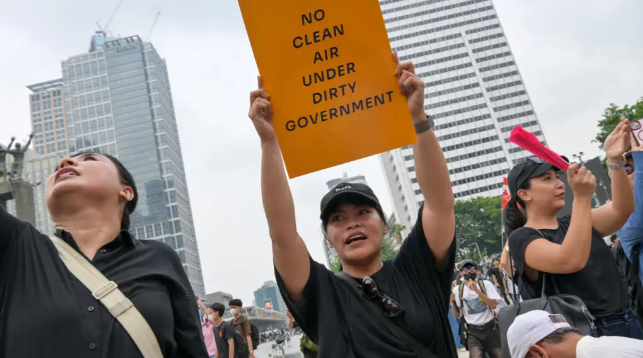
Indonesia is facing a serious environmental crisis as forest and peatland fires continue to devastate several regions across the archipelago. Amid widespread destruction and the health consequences of deteriorating air quality, young people are increasingly mobilizing to express their dissatisfaction. On October 28, 2026, thousands of students and civil society members took to the streets in Jakarta and other major cities to criticize the government’s handling of the environmental disaster and demand more effective action.
The demonstrations, organized in around twenty cities, including Jakarta, Makassar, Bandung, Yogyakarta and Pontianak, primarily targeted the authorities’ response to the fires. Students called for the fires to be officially declared a national disaster, which would allow additional resources to be mobilized to contain their spread. They also demanded thorough investigations into companies potentially responsible for the outbreaks, legal action against those involved, and concrete measures to restore damaged ecosystems.
According to satellite data from the independent platform Nusantara Atlas, approximately 1.9 million hectares were affected by fires between January and the end of September 2026, including nearly 85,000 hectares of natural forest. The regions of Borneo, Sumatra and Papua are among the hardest hit. The situation has been aggravated by an exceptionally intense drought associated with the El Niño climate phenomenon, which has dried out soils and peatlands, making them more vulnerable to fires. Industrial activities, particularly palm oil plantations, mining operations and pulp production, have also come under scrutiny. Suspicions surrounding the use of fire to clear land within certain industrial concessions have raised questions about the responsibility of major companies in the scale of the disaster.
Beyond the environmental damage, the health consequences are a major source of concern. Toxic smoke from the fires has significantly deteriorated air quality and contributed to an increase in respiratory illnesses. According to a study published on October 29 by the Centre for Research on Energy and Clean Air, approximately 58 million Indonesians were exposed to unhealthy or even hazardous levels of air pollution in September. This pollution was also associated with more than 5,200 deaths in Indonesia during August and September. Vulnerable populations, particularly children and older people, are among those most exposed to these health risks.
The crisis has also taken on a political dimension. Protesters have criticized President Prabowo Subianto, who took office in October 2024, and challenged his government’s budget priorities. In particular, they have questioned the spending allocated to his free school meal programme, arguing that more resources should be directed towards disaster prevention, environmental protection and essential public services. The demonstrations have also highlighted concerns over the decline of civil liberties and the difficulties faced by citizens’ movements in expressing criticism. Clashes between protesters and security forces were reported, particularly in Jakarta and Yogyakarta, where authorities reported 116 injuries.
Furthermore, the fires extend beyond Indonesia’s borders. Smoke has spread to several neighbouring countries, including Malaysia and Singapore, raising public health concerns and diplomatic tensions. Singapore has reportedly issued preventive notices to ten Indonesian companies suspected of being linked to the fires, invoking its legislation against transboundary haze pollution. In Malaysia, calls to boycott Indonesian products have also emerged. In response to regional criticism, Indonesian authorities have defended their management of the crisis, pointing to legal proceedings against certain companies, assistance provided to affected provinces and weather modification operations intended to induce rainfall.
Against this backdrop, student protests reflect growing public concern over environmental protection, corporate accountability and the government’s political priorities. As fires continue to threaten ecosystems, public health and relations with neighbouring countries, demonstrators are calling for a more ambitious and sustainable response. The challenge is no longer limited to putting out the flames; it also involves addressing the structural causes of deforestation and strengthening oversight mechanisms to prevent similar environmental disasters from happening again.
