
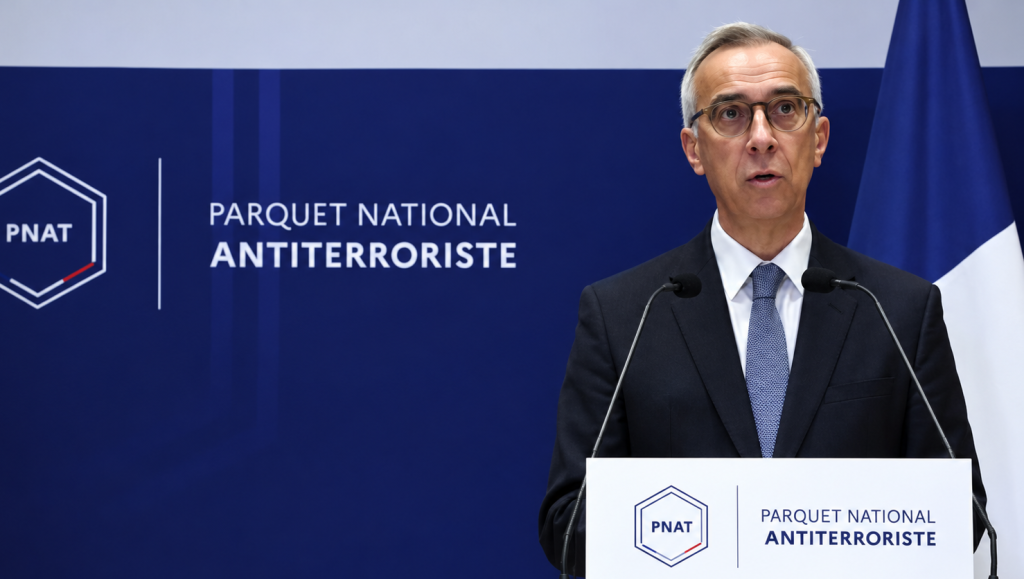
France’s National Anti-Terrorism Prosecutor’s Office (PNAT) revealed new details on Thursday, October 29, 2026, concerning the deadly attack carried out on October 23 in Trappes and La Verrière, in the Yvelines department near Paris. Kévin T., a 39-year-old man facing charges of terrorist murder, reportedly admitted deliberately targeting people he perceived as Muslim, African, or North African. According to anti-terrorism prosecutor Olivier Christen, the suspect allegedly chose Trappes because he considered the town a “stronghold of Islamists,” a belief he invoked to justify his actions.
The attack left one person dead and seven others injured. The victim, Pengo Bossio Wangi, was a 26-year-old French citizen originally from the Democratic Republic of the Congo. The shooting unfolded across several locations in Trappes and La Verrière, where the suspect allegedly opened fire repeatedly with a submachine gun. According to preliminary information released by the authorities, at least 128 rounds were fired across eight crime scenes. Several people sustained serious injuries, including an 11-year-old girl. As of October 29, three victims remained hospitalized, one of whom was reportedly in critical condition.
During questioning, Kévin T. reportedly acknowledged selecting his victims based on their appearance and their presumed origins. However, he denied having terrorist intentions and maintained that his actions were justified. He also denied deliberately targeting children, claiming that he may have misjudged their age because of their height. According to the prosecutor, the suspect nevertheless expressed no remorse. These statements are central to the investigation, which seeks to establish the precise motives behind the attack and determine the extent to which it was planned.
A search of the suspect’s home in Plaisir uncovered several objects and documents that could shed light on his background and beliefs. Investigators reportedly found a copy of Mein Kampf, Adolf Hitler’s book, as well as a Quran, a Bible, two knuckle-dusters, a steel bayonet, a firearm suppressor, and a magazine. Stickers bearing nationalist slogans and messages expressing support for the National Rally (RN) and law enforcement were also discovered. According to the prosecutor, the suspect had designed the stickers himself and ordered them to be manufactured more than a year before the attack.
Olivier Christen also highlighted the apparent degree of preparation involved. Investigators reportedly identified the purchase, in September, of several components intended to improve the effectiveness of the suspect’s weapon, along with a police armband and handcuffs. These discoveries have raised questions about how the attack was organized, what resources the suspect had at his disposal, and how he was able to prepare an operation of this scale without being detected beforehand by intelligence services.
Kévin T.’s personal history is also under investigation. The suspect, who has four previous convictions, referred to psychological difficulties and said he had started using drugs at the age of 13. Toxicology tests reportedly detected cannabis and cocaine in his blood at the time of the attack, as well as substances consistent with the use of antipsychotic and antidepressant medication. According to the prosecutor, the suspect’s claim that he had schizophrenia appeared to reflect his own interpretation rather than an established medical conclusion reached by the examining physician. These findings must be considered carefully and do not, in themselves, determine his criminal responsibility.
Following his police custody, Kévin T. was brought before the judicial authorities as part of proceedings to formally charge him before an anti-terrorism investigating judge. The PNAT requested that he be placed in pretrial detention. The judicial investigation will seek to establish his precise motives, determine whether he had links to other individuals or organizations, and clarify how he obtained his weapons and equipment. The case involves allegations of murder and attempted murder in connection with a terrorist undertaking, with an aggravating circumstance relating to the alleged racist nature of the acts.
The attack has also reignited political debate in France over the spread of racist rhetoric and the normalization of hatred directed at people from immigrant backgrounds. President Emmanuel Macron condemned the climate of racism and criticized far-right political movements, including the National Rally and its allies. The party rejected these accusations. Several gatherings were also organized to denounce racism and hate speech.
Beyond the human toll, the case raises serious questions about preventing racist violence, controlling access to firearms, and identifying individuals who may be preparing targeted attacks. Investigators must now establish criminal responsibility and provide answers to the victims and their families. Kévin T. remains presumed innocent unless and until he is convicted by a court.
