
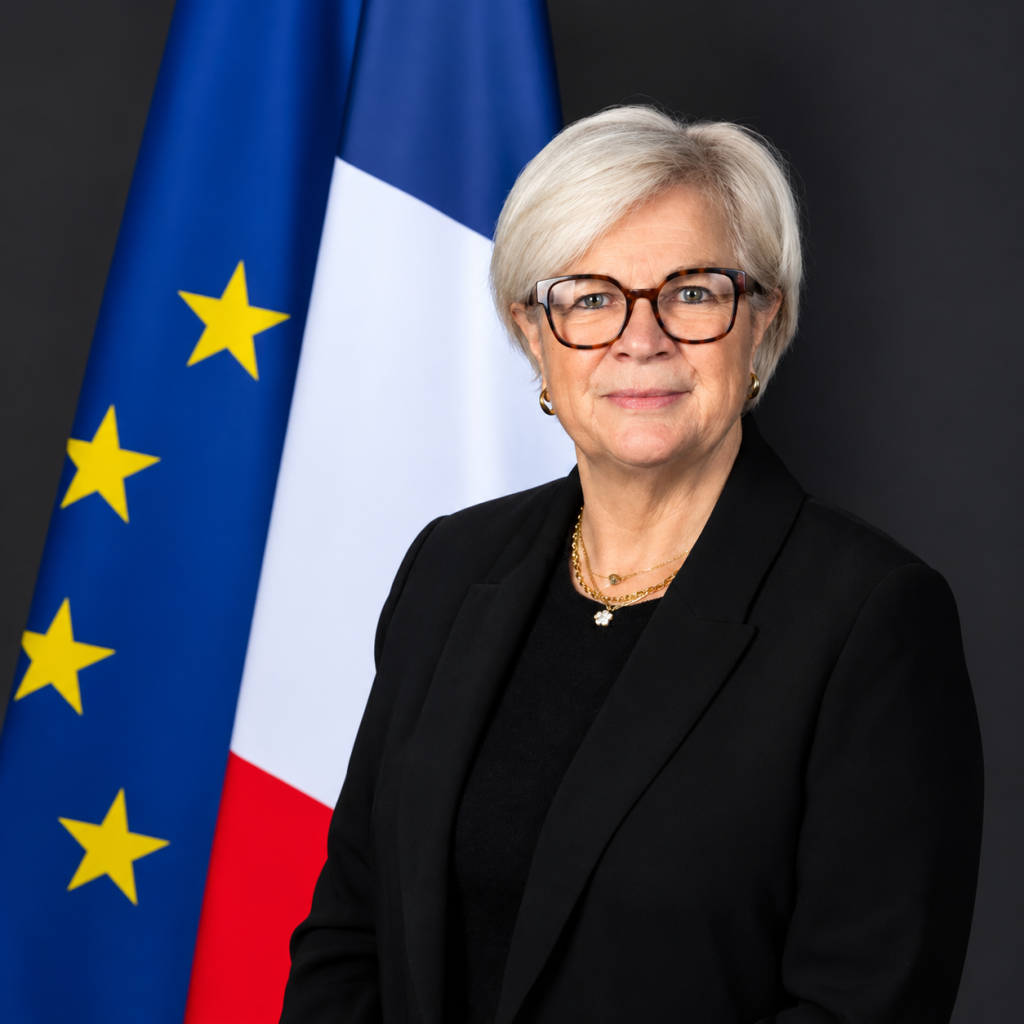
Military cooperation between Madagascar and France is expected to enter a new phase, with particular emphasis on maritime security, military training and support for local communities. These priorities were at the heart of discussions between Malagasy authorities and Catherine Vautrin, France’s Minister for the Armed Forces and Veterans, during her visit to Madagascar on October 6, 2026.
Following her meetings with Malagasy officials, Catherine Vautrin stressed the importance of continuing military exchanges while respecting the sovereignty of both countries. France considers Madagascar a key partner in the southwestern Indian Ocean, particularly because of its geographical position and its proximity to French territories in the region. The two countries therefore aim to strengthen coordination in addressing security challenges affecting their respective maritime areas.
Maritime security is emerging as one of the main pillars of the partnership. The Mozambique Channel is a strategically important area for both countries because of growing maritime activity and the risks associated with illicit trafficking. Disruptions to international shipping routes, particularly amid tensions in the Middle East and developments around the Strait of Hormuz, have further highlighted the importance of protecting maritime routes in the Indian Ocean.
For Madagascar, strengthening surveillance capabilities is a major priority in order to better protect its coastline and maritime resources. In this context, France plans to provide the Malagasy Armed Forces with around 100 surveillance drones by the end of 2026. An initial batch of approximately 20 drones is expected to be delivered quickly, followed by a further 80 aircraft. The equipment is intended for surveillance, observation and reconnaissance missions both on land and at sea.
However, the cooperation extends beyond the provision of military equipment. Training and skills transfer are also key components of the partnership. Malagasy military personnel are being trained in drone operation, deployment and maintenance, with the aim of gradually strengthening the country’s operational autonomy. Several Malagasy personnel have already received training in this field, particularly within the air and naval forces.
The drones could also be used to improve security operations inside Madagascar. According to Malagasy Armed Forces Minister General Ely Razafitombo, the technology should help improve intelligence gathering in areas affected by the activities of dahalo, armed groups involved in cattle theft and rural insecurity. Faster access to information could enable security forces to respond more effectively to situations on the ground.
Beyond strictly military cooperation, Madagascar and France also intend to develop initiatives serving local communities. The French military could work alongside Madagascar’s military engineering units on the rehabilitation of roads and bridges. Cooperation also covers healthcare, including support for military hospitals, as well as civil-military initiatives and preparations for emergencies and natural disasters.
The training of Malagasy military personnel remains another central component of the partnership. It is intended to strengthen the capabilities of the Malagasy Armed Forces while improving their ability to operate alongside French forces when necessary. For Catherine Vautrin, the exchange of expertise and training are essential to enabling the two countries’ armed forces to cooperate effectively while maintaining the sovereignty of each state.
This renewed cooperation builds on a long-standing relationship between France and Madagascar. France considers Madagascar an important partner in the southwestern Indian Ocean and highlights the shared security interests between the two countries. Madagascar is also regarded by France as its leading regional partner within the French Armed Forces in the Southern Indian Ocean Zone (FAZSOI).
The strengthening of military cooperation between Antananarivo and Paris therefore extends beyond traditional defence matters. It is gradually developing into a broader partnership covering maritime security, territorial surveillance, military training, infrastructure, healthcare and disaster preparedness.
For Madagascar, the challenge will be to use this cooperation to strengthen its national capabilities while maintaining its sovereignty and a diversified approach to international partnerships. The coming months will show how these commitments translate into concrete actions on the ground and contribute to security and stability in the Indian Ocean region.
