
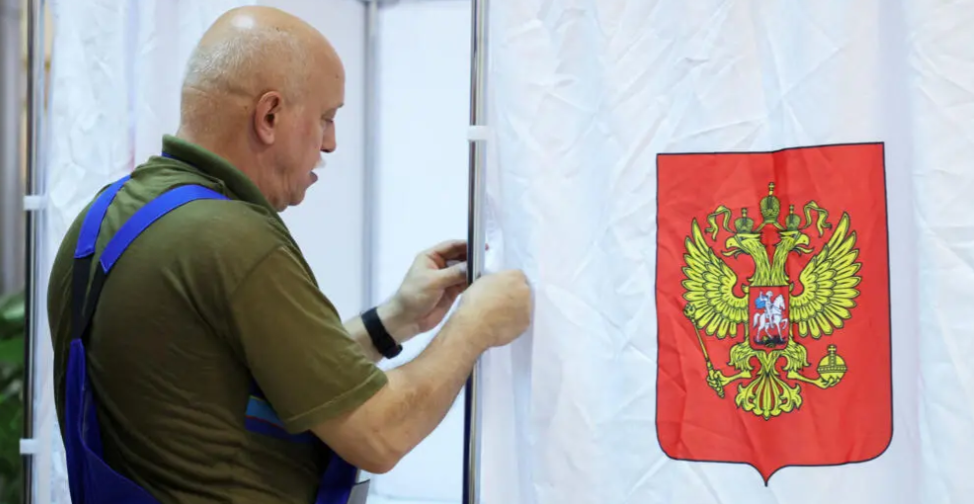
On the eve of Russia’s parliamentary elections, scheduled to take place from September 18 to 20, 2026, Moscow has announced the opening of ten polling stations near border crossings with Poland, Lithuania, Latvia and Estonia. The measure is primarily intended to allow Russian citizens living in these countries to participate in the vote, as access to Russian diplomatic facilities has been significantly reduced since the beginning of the full-scale invasion of Ukraine.
The decision was announced on September 17 by Ella Pamfilova, chairwoman of Russia’s Central Election Commission. According to her, the arrangement builds on an initiative already used during the 2024 presidential election and is intended to provide Russian citizens living in neighboring countries with an additional opportunity to cast their ballots. Russian authorities have also indicated that some voters can use electronic voting.
The ten polling stations will be distributed across three Russian regions. Five will be located in the Pskov region, near Latvia and Estonia; four in the Kaliningrad region, the Russian exclave situated between Poland and Lithuania; and one in the Leningrad region, which shares a border with Estonia. Voters concerned will be able to use these polling stations throughout the three-day voting period.
The measure comes amid particularly tense relations between Russia and its European neighbors. Poland and the three Baltic states Estonia, Latvia and Lithuania are members of both the European Union and NATO and have adopted a firm position toward Moscow since the beginning of the war in Ukraine. Diplomatic and consular relations between Russia and these countries have also deteriorated, contributing to the decision to establish polling facilities on Russian territory close to the borders.
The 2026 election is an important event for Russia’s political institutions. Voters are expected to elect all 450 members of the State Duma, the lower house of the Russian parliament. Half of the seats, or 225, will be allocated through a proportional party-list system, while the remaining 225 seats will be contested in single-member constituencies. Regional and municipal elections are also scheduled to take place in several parts of the country.
The 2026 vote is also the first Russian parliamentary election since the launch of the full-scale invasion of Ukraine in February 2022. President Vladimir Putin has urged Russians to participate and has presented the election as an opportunity to demonstrate national unity and support for Russian troops.
At the same time, the participation of opposition figures has been the subject of criticism. Several candidates opposed to the war have reportedly been excluded from the election, while the Russian political system remains highly controlled. Candidates from officially authorized parties are nevertheless taking part in the contest, with United Russia, the political party associated with the Kremlin, remaining the dominant parliamentary force.
For Russian citizens living abroad, the Central Election Commission has announced the establishment of 333 polling stations in 152 countries. The stations located near the borders with Poland and the Baltic states therefore represent a specific arrangement for voters who may face difficulties accessing Russian diplomatic or consular facilities in their countries of residence.
The announcement also comes at a particularly sensitive moment for security in Eastern Europe. On September 17, Russia carried out a major wave of missile and drone strikes against Kyiv and several other Ukrainian regions. Following attacks in western Ukraine near the Polish border, Poland deployed military aircraft and temporarily closed the airports in Rzeszów and Lublin. Polish authorities nevertheless said that no violation of their airspace had been detected.
The establishment of Russian polling stations close to the territory of European Union and NATO member states therefore reflects the complex circumstances surrounding Russia’s 2026 parliamentary elections. Officially, the measure is intended to address practical difficulties faced by Russian voters abroad. However, it is taking place against a backdrop of deteriorating relations between Russia and Europe, heightened security concerns and the continuing war in Ukraine.