
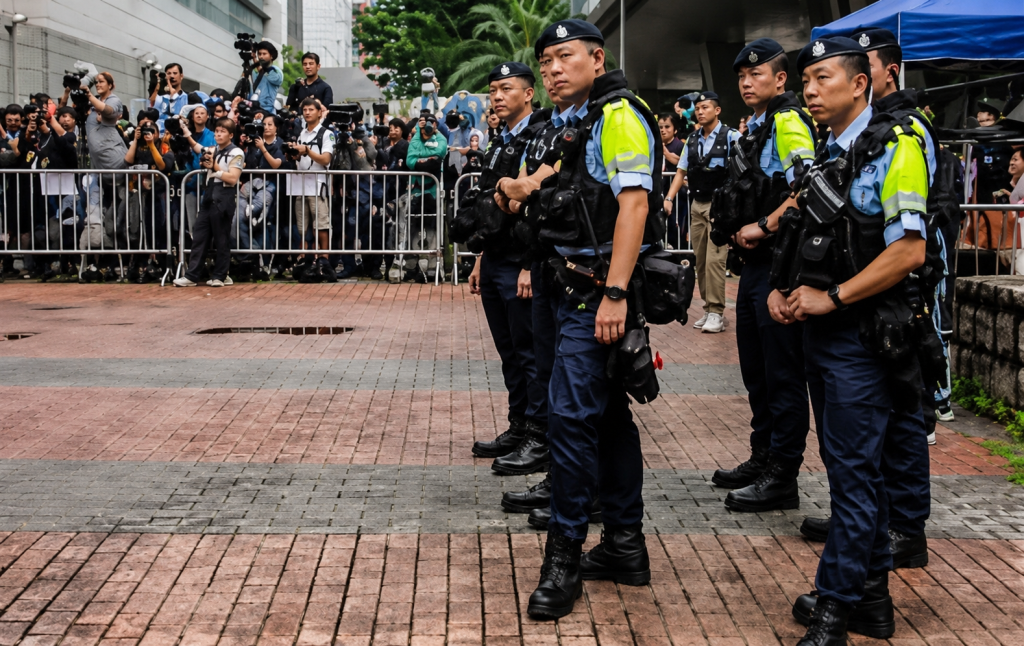
A Hong Kong court found two prominent pro-democracy activists, Lee Cheuk-yan and Chow Hang-tung, guilty on Friday, August 21, 2026, of “inciting subversion of state power” under Hong Kong’s National Security Law. The case is closely linked to their long-standing efforts to commemorate the victims of the 1989 Tiananmen Square crackdown and has become another major test of civil liberties and political freedoms in the territory.
Lee Cheuk-yan, 69, and Chow Hang-tung, 41, were former leaders of the Hong Kong Alliance in Support of Patriotic Democratic Movements of China, an organization that for decades organized the territory’s annual candlelight vigil commemorating the victims of the June 4, 1989 crackdown in Beijing. For many years, Hong Kong was one of the few places under Chinese sovereignty where large public commemorations of Tiananmen were permitted.
The annual vigil became an important symbol of Hong Kong’s relative political freedoms. Thousands of people traditionally gathered in Victoria Park each June 4 to light candles and remember those killed when Chinese authorities used military force to suppress pro-democracy demonstrations in and around Tiananmen Square. However, the vigil was banned from 2020 onward, amid the introduction of increasingly restrictive security measures.
The prosecution focused in particular on the Alliance’s long-standing political demands, including the call to “end one-party dictatorship.” According to the court, the repeated use of this slogan was not simply an expression of political opinion but constituted an attempt to encourage opposition to the political system established under the leadership of the Chinese Communist Party. Judges concluded that the activists had sought to encourage others to undermine state power.
The case is being prosecuted under Hong Kong’s National Security Law, which was imposed by Beijing in June 2020 following months of major pro-democracy protests in 2019. The legislation criminalizes acts considered to involve secession, subversion, terrorism or collusion with foreign forces. Since its implementation, numerous political activists, opposition figures and civil society organizations have faced prosecution, imprisonment or dissolution.
Lee and Chow were arrested in 2021 and have remained in detention while the legal proceedings continued. Both pleaded not guilty and argued that their activities were peaceful and protected by rights to freedom of expression and assembly. The trial began in January 2026 and lasted 24 days. A third former leader of the Alliance, former lawmaker Albert Ho, pleaded guilty in January.
The two activists now face a maximum sentence of 10 years in prison, although the final punishment has not yet been announced. Sentencing proceedings are expected to take place at a later stage. Their prolonged detention and the severity of the possible sentence have attracted considerable attention from international governments and human rights organizations.
The verdict has also triggered strong criticism from international rights groups. Amnesty International described the convictions as deeply troubling and argued that Hong Kong’s National Security Law is being used to punish peaceful efforts to preserve the memory of one of the most sensitive episodes in modern Chinese history. The organization warned that the case contributes to the broader suppression of historical discussion and political expression in Hong Kong.
The disappearance of the Tiananmen vigil from Hong Kong’s public life is particularly significant. For more than three decades, the territory had provided a rare space where the events of June 4, 1989 could be publicly discussed and commemorated. The dissolution of the Hong Kong Alliance in 2021, followed by the prosecution of its former leaders, has effectively brought an end to one of the territory’s most prominent annual acts of remembrance.
The case also illustrates the broader political transformation of Hong Kong since the 2019 protests. Under the “one country, two systems” framework, Hong Kong had historically maintained civil liberties and political freedoms that were more extensive than those available in mainland China. Since the introduction of the National Security Law, however, the political environment has changed significantly, with pro-democracy organizations dismantled, activists imprisoned and public demonstrations increasingly restricted.
For the Hong Kong authorities, the National Security Law remains a necessary instrument for protecting national security, maintaining stability and preventing threats to state power. Critics, however, argue that its broad application has substantially narrowed the space for political dissent and peaceful expression.
The conviction of Lee Cheuk-yan and Chow Hang-tung therefore carries a significance that extends beyond the two individuals. It concerns the limits of political expression, the right to preserve historical memory and the future of civil liberties in Hong Kong. The case demonstrates how the commemoration of Tiananmen, once a major public event in the territory, has become increasingly difficult under the current political and legal environment.
The forthcoming sentencing will be closely watched in Hong Kong and internationally. Beyond the fate of the two activists, the outcome is likely to further influence perceptions of judicial independence, freedom of expression and the scope of the National Security Law in Hong Kong.