
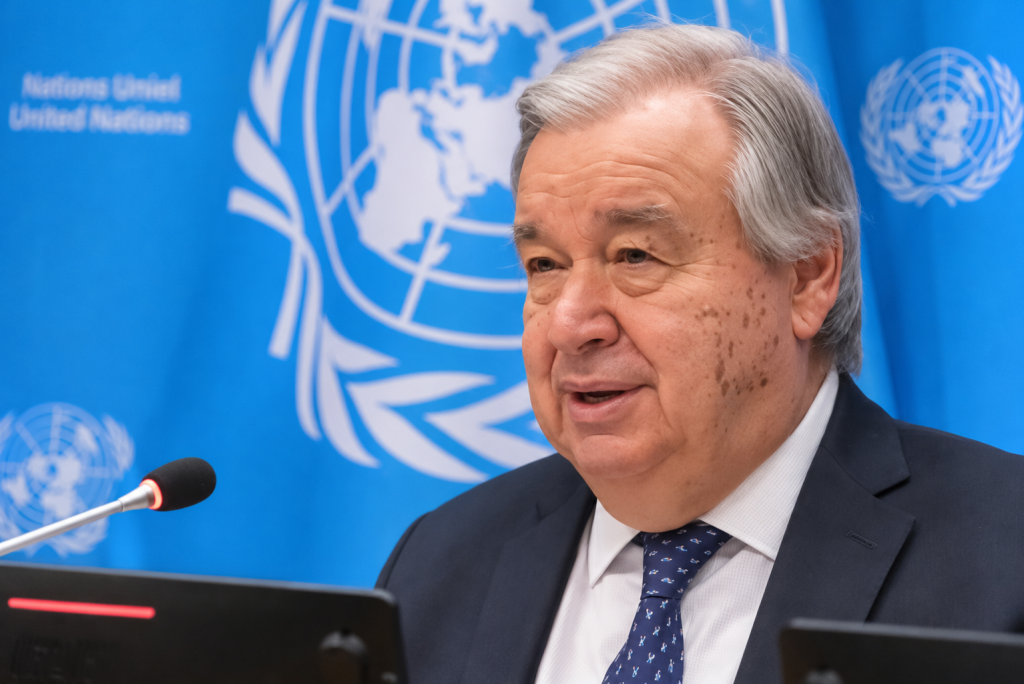
The race to succeed António Guterres as Secretary-General of the United Nations has entered a new phase with the official candidacy of Olara Otunnu of Uganda. His entry brings the total number of candidates to seven, including two African contenders competing against five candidates from Latin America and the Caribbean.
Olara Otunnu, 75, is a former United Nations Under-Secretary-General and former Special Representative for Children and Armed Conflict. He joins former Senegalese President Macky Sall as Africa’s second candidate. The remaining contenders are Michelle Bachelet (Chile), María Fernanda Espinosa (Ecuador), Rafael Grossi (Argentina), Rebeca Grynspan (Costa Rica), and Carolyn Rodrigues-Birkett (Guyana). With four women and three men in the race, this election could also result in the appointment of the first female Secretary-General in the history of the United Nations.
The selection process comes at a time of unprecedented global challenges, including armed conflicts, geopolitical tensions, climate change, the rapid development of artificial intelligence, and ongoing financial constraints facing the UN. During recent informal dialogues with Member States, the candidates outlined their priorities, focusing on strengthening multilateral cooperation, reforming global governance, improving peacekeeping operations, and ensuring the long-term financial sustainability of the organization.
For Africa, the election carries significant symbolic importance. The continent has not held the position of UN Secretary-General since Kofi Annan left office in 2006. Before him, Boutros Boutros-Ghali was the only other African to lead the organization. The election of either Macky Sall or Olara Otunnu would therefore mark the return of an African leader to the UN’s highest office after two decades.
However, the race remains highly competitive. While the principle of regional rotation has fueled expectations that the next Secretary-General could come from Latin America and the Caribbean, the final decision rests with the United Nations Security Council, where each of the five permanent members holds veto power. The Council’s first informal straw polls are expected to begin in the coming days, representing a crucial step toward selecting the next UN Secretary-General, whose five-year term will begin on 1 January 2027.