
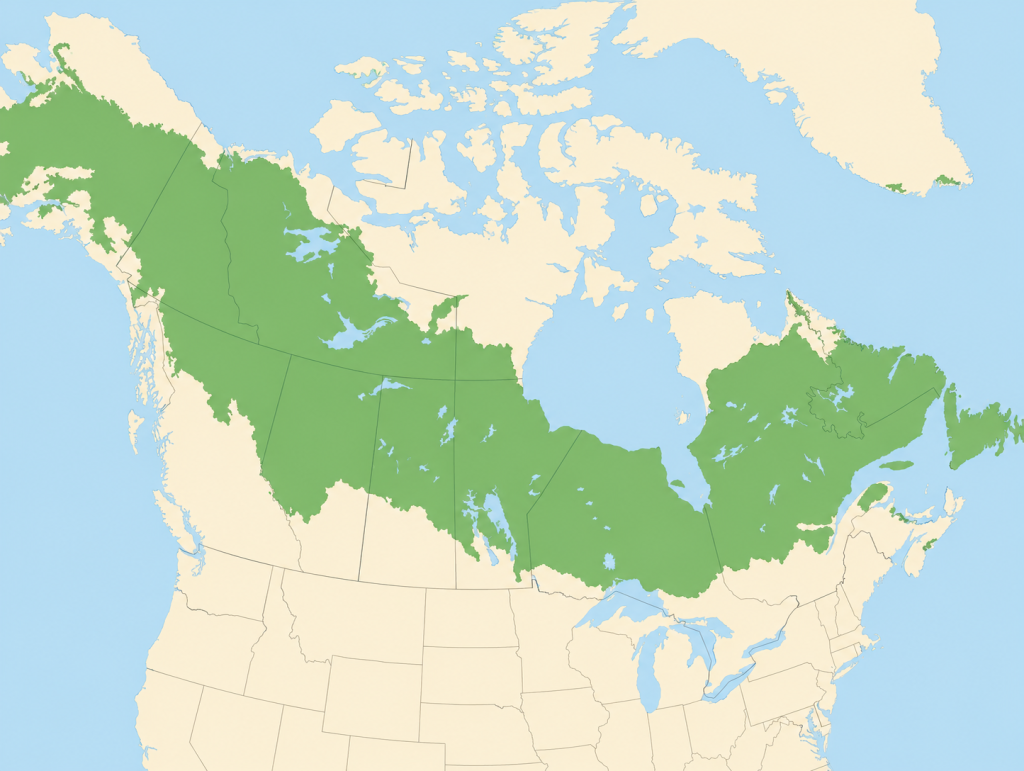
Canada is experiencing another exceptionally severe wildfire season, highlighting an environmental crisis that continues to intensify. By mid-July, nearly a thousand wildfires were still burning across the country, with more than 80% remaining out of control. Ontario and the Northwest Territories are among the hardest-hit regions, while smoke from the fires has drifted across the border into the United States, significantly reducing air quality in several major American cities.
In Toronto, a thick blanket of smoke cast an orange haze over the city for several days. Fine particulate pollution reached some of the highest levels recorded worldwide, prompting health authorities to issue warnings for vulnerable populations. Scientists attribute the growing frequency and intensity of these megafires to climate change, prolonged droughts, and unusually high temperatures, all of which leave forests increasingly dry and highly flammable.
Beyond the immediate destruction, experts are increasingly concerned about the long-term future of Canada’s boreal forest, one of the largest forest ecosystems on Earth. Although the boreal forest has historically regenerated naturally after wildfires, the fires are now occurring too frequently for recovery to take place. Trees no longer have sufficient time to mature before another wildfire strikes, disrupting natural regeneration. Some researchers now warn that parts of the boreal ecosystem face a genuine risk of ecological collapse if this trend continues.
Since the beginning of the wildfire season, approximately three million hectares have already been burnedan area roughly equivalent to the size of Belgium. The fires have also forced thousands of residents to evacuate their homes and have destroyed numerous properties, particularly in communities across northern Ontario. The situation has revived concerns following the record-breaking 2023 wildfire season, during which nearly 18 million hectares were devastated.
In response, scientists are exploring new adaptation strategies to improve forest resilience. One proposed solution is to diversify tree species rather than relying on large areas dominated by a single species. Such an approach could create forests that are more resistant to fire, even though it would gradually transform the iconic landscape of Canada’s boreal region. Researchers believe these changes may become necessary as climate change increases the likelihood of more frequent and intense wildfires.
Canadian authorities are also strengthening their wildfire response capabilities. The federal government has announced an investment of CAD 316.7 million over five years to improve wildfire prevention and suppression. For the first time, a national fleet of aircraft and helicopters will be available to support provincial firefighting efforts, while several experts are calling for the creation of a federal agency dedicated to coordinating wildfire preparedness and emergency response nationwide.
This year’s wildfire season reinforces the reality that large-scale forest fires are no longer isolated natural events but a lasting consequence of climate change. According to scientists, the challenge is no longer limited to extinguishing fires. It also involves rethinking forest management practices to preserve the boreal forest’s vital role in protecting biodiversity, storing carbon, and regulating the global climate.