
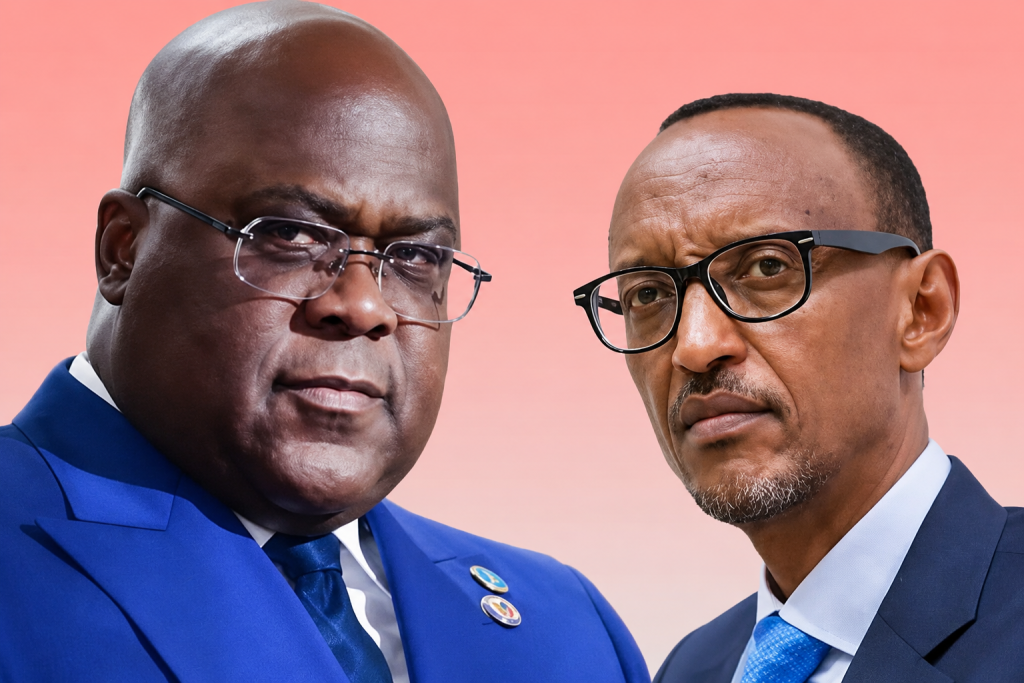
The Democratic Republic of Congo (DRC) has decided to bring its dispute with Rwanda before international justice. The Congolese government has filed a case before the International Court of Justice (ICJ), accusing Kigali of being responsible for serious violations of international law linked to ongoing violence in the eastern part of the country.
The legal action comes amid heightened security tensions in eastern DRC, particularly in the provinces of North Kivu and South Kivu, where armed groups, mass population displacement and repeated allegations of abuses against civilians have continued for years. Kinshasa claims that some of these acts were committed with the direct or indirect involvement of Rwandan forces and armed groups allegedly supported by Kigali.
In its application, the DRC accuses Rwanda of violating several international commitments, including obligations related to the prevention of genocide, the fight against racial discrimination, and the prohibition of torture and inhumane treatment. Kinshasa is seeking legal recognition of Rwanda’s alleged responsibility, as well as measures aimed at ending the violations it has reported.
This legal move reflects President Félix Tshisekedi’s strategy of shifting the conflict from the battlefield to international institutions. For several years, the DRC has accused Rwanda of supporting the M23 rebel movement, which operates in eastern Congo. Kigali has rejected these accusations, arguing that its actions are mainly driven by security concerns linked to armed groups operating near its border.
The ICJ case represents a new chapter in the long-standing dispute between the two countries. The Court has already handled a previous case involving the DRC and Rwanda over armed activities on Congolese territory, highlighting the deep historical roots of tensions between Kinshasa and Kigali.
Beyond the legal dimension, the move comes as the humanitarian situation in eastern DRC remains critical. Civilians continue to suffer from the consequences of fighting, including forced displacement, insecurity and limited access to basic services. Through international justice, the DRC hopes to increase diplomatic pressure and encourage a lasting solution to the crisis.
However, proceedings before the ICJ can be lengthy and complex. The outcome will depend on issues such as the Court’s jurisdiction, the legal arguments presented by both countries, and their willingness to cooperate with the judicial process. The case therefore marks a major new development in the regional crisis affecting the Great Lakes region of Africa.