
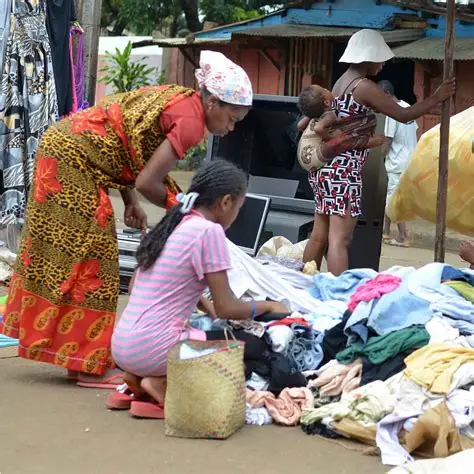
Second-hand clothing, widely consumed in Madagascar because of its affordability and its importance in providing clothing access to many households, could soon face higher costs following the introduction of a new tax measure. According to the Draft Supplementary Finance Law (PLFR), imported second-hand clothes would be subject to a 10% excise duty. The measure aims to strengthen public revenues, but it is already raising concerns about its potential economic and social impacts.
An excise duty is an indirect tax applied to certain imported or consumed goods. For the second-hand clothing sector, this new tax would come on top of the existing costs already paid by importers, including customs duties and other import-related charges. The government’s objective is to expand the tax base and increase state revenues at a time when public finances remain under pressure.
This decision comes as the second-hand clothing market plays an increasingly important role in Madagascar’s economy. Customs data indicate a significant growth in the importation of used clothing in recent years. In 2024, around 61,100 tonnes of second-hand clothing were imported and released for consumption in Madagascar, with an estimated CIF value of 395.3 billion ariary, showing an increase compared with the previous year.
This growth reflects the strong demand for second-hand clothing among Malagasy consumers. In a context marked by declining purchasing power and rising living costs, thrift clothing has become an affordable alternative to new garments. The sector also provides income opportunities for many traders, market sellers, specialized shops, and online businesses.
However, the introduction of a 10% excise duty could lead to higher prices for consumers. Importers and retailers may have no choice but to pass this additional cost on to customers in order to maintain their profit margins. Such a price increase could particularly affect low-income households that rely on second-hand clothing as a more accessible option for everyday needs.
Beyond consumers, professionals working in the sector may also face new challenges. Many second-hand clothing businesses operate with limited profit margins, and higher import costs could reduce their ability to offer competitive prices. Some traders may be forced to adjust their activities or reconsider their business models.
For the authorities, this measure could serve several purposes: improving tax collection, generating additional government revenue, and potentially encouraging the development of locally produced textile products. However, the main challenge will be ensuring that this reform does not weaken a sector that has become essential for many Malagasy families.
The second-hand clothing industry occupies a unique position in Madagascar’s economy. It combines commercial activity, affordable access to clothing, and a source of income for thousands of small entrepreneurs. The continuous increase in imports highlights the importance of this sector within the country’s trade landscape.
The implementation of this new taxation system will therefore be closely monitored by economic stakeholders. Between the government’s need to increase public revenue and the necessity of preserving affordable access to clothing, authorities will have to find a balance to ensure that the reform does not disproportionately impact consumers and small businesses.