
Facing U.S. dominance in cloud computing and artificial intelligence, as well as Asia’s leadership in semiconductor manufacturing, the European Union unveiled an ambitious legislative package on June 3, 2026, aimed at strengthening its technological sovereignty. The initiative marks a new phase in Europe’s strategy to secure critical digital infrastructure, protect sensitive data, and develop homegrown alternatives in key sectors of the digital economy.
The European Commission considers the continent’s growing reliance on foreign technologies to be a significant economic, industrial, and geopolitical risk. According to Brussels, a large share of the digital infrastructure used across Europe, particularly in cloud services, AI, and digital platforms, is controlled by non-European companies, mainly from the United States and Asia. This situation has raised concerns about data security, the resilience of essential services, and the EU’s strategic autonomy.
The new plan is built around several key pillars. The first is the “Chips Act 2.0,” an expansion of the program launched in 2023 to boost semiconductor production within Europe. Brussels intends to accelerate investments in chip manufacturing facilities, simplify administrative procedures, and strengthen European industrial capabilities in order to reduce dependence on Asian and American suppliers.
The second pillar focuses on cloud computing and artificial intelligence. The European Union plans to triple its data center capacity over the next five to seven years to meet the rapidly growing demand generated by AI technologies. A European cloud sovereignty certification framework will also be introduced to better protect sensitive data and encourage the development of competitive European cloud solutions.
Brussels is also placing strong emphasis on open-source software as a driver of digital sovereignty. A dedicated strategy will support European developer communities, enhance the security of open-source technologies, and encourage their adoption by public administrations and private businesses. The objective is to reduce dependence on foreign proprietary platforms while fostering local innovation.
The digital transformation of the energy sector is another important component of the initiative. The European Commission aims to better integrate future data centers and AI infrastructure into Europe’s power grids, limiting their environmental impact while supporting the transition toward a more sustainable economy.
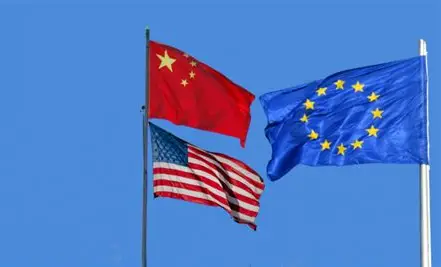
This European push comes at a time of intensifying global technological competition. While the United States continues to dominate cloud services, digital platforms, and much of the artificial intelligence ecosystem, China is making massive investments in strategic technologies and semiconductor production. Many European policymakers now view control over digital infrastructure as a matter of sovereignty comparable to energy security or defense.
To achieve its objectives, the Commission estimates that hundreds of billions of euros will be required over the coming decade. Some European assessments suggest that nearly €320 billion could be mobilized to strengthen the Union’s autonomy in cloud computing, artificial intelligence, and semiconductor manufacturing.
Through this technological sovereignty strategy, Europe aims not only to reduce its dependence on major digital powers but also to build a resilient ecosystem capable of supporting economic competitiveness, security, innovation, and global influence in the digital economy of the future.