
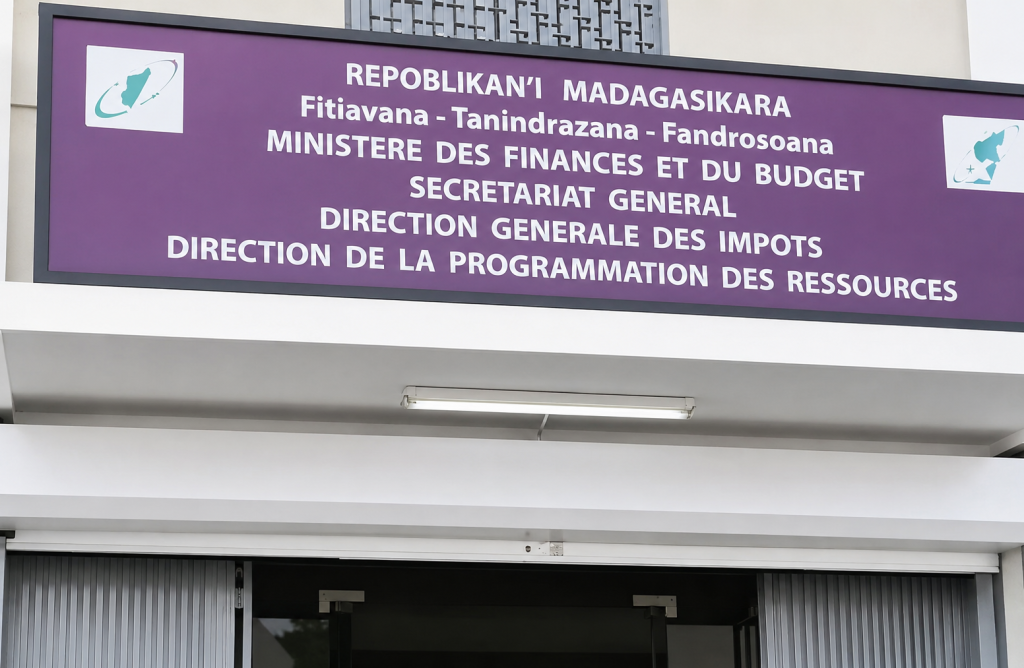
Value Added Tax (VAT) and the Tax on Salaries and Related Income (IRSA) accounted for more than half of Madagascar’s domestic tax revenue collected during the first quarter of 2026. According to the latest budget execution report, the two major tax sources generated a combined 681.9 billion ariary, representing 52.54% of all domestic tax revenue collected between January and March.
Out of the 1.298 trillion ariary in domestic tax revenue collected by the General Directorate of Taxes (DGI), VAT remained the leading contributor to public finances. With 459.6 billion ariary collected, VAT alone accounted for 35.41% of total domestic tax revenue during the quarter. This performance highlights the central role of household consumption and formal economic activities in financing the State budget.
Income Tax (IR) ranked second, with 279.7 billion ariary collected, representing 21.55% of domestic tax revenue. The tax achieved a budget execution rate of 95.82%, one of the highest among the country’s main tax categories. The strong performance was mainly supported by formal sector companies through advance and balance tax payments made at the beginning of the fiscal year.
IRSA completed the top three revenue sources with 222.3 billion ariary collected, accounting for 17.13% of domestic tax revenue. Thanks to the withholding tax system applied to salaries, IRSA also maintained strong stability with a realization rate of 95.12%.
Together, VAT, IR, and IRSA represented 74.08% of Madagascar’s domestic tax revenue during the first quarter, amounting to 961.6 billion ariary. Other tax categories therefore accounted for less than one-third of the resources mobilized by the tax administration. This high concentration reflects the Malagasy State’s structural dependence on domestic consumption, salaried income, and formal sector activities.
Overall, total tax revenue collected by the State, including customs revenue, reached 2.158 trillion ariary in the first quarter of 2026. However, customs performance was affected by several factors, including logistical disruptions caused by Cyclone Gezani and declining international fuel prices, which reduced taxes collected on imported petroleum products.
Despite these challenges, the Malagasy government continues to pursue ambitious tax mobilization objectives. The 2026 Finance Law sets an annual target of 11.247 trillion ariary in tax revenue, including more than 6.221 trillion ariary expected from domestic taxes. The strategy is part of broader fiscal reforms supported by the International Monetary Fund (IMF), aimed at expanding the tax base, strengthening tax system digitalization, and reducing VAT exemptions.