
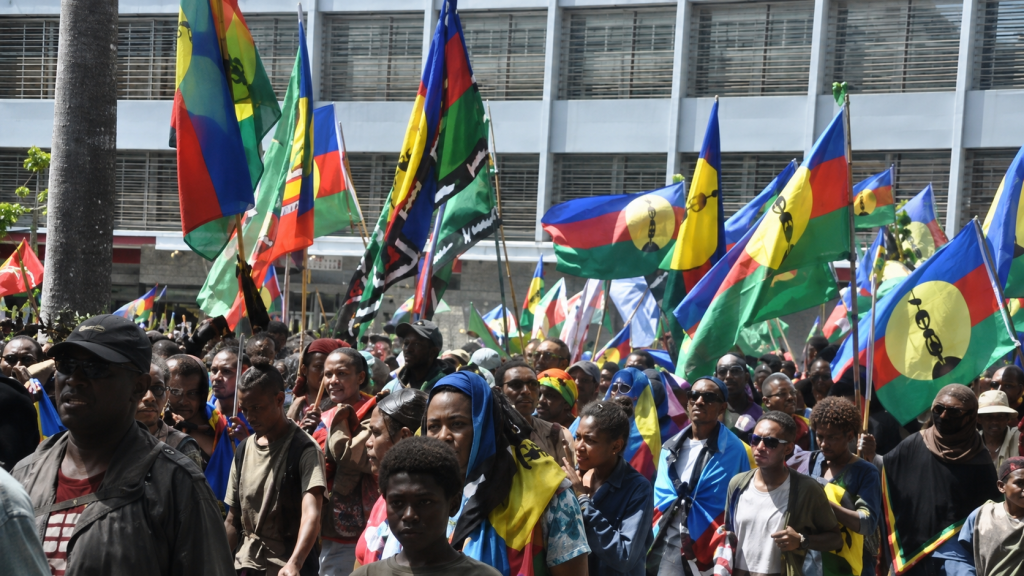
The French government is continuing its efforts to reform one of the most sensitive political issues in New Caledonia: the modification of the electoral body eligible to vote in the provincial elections scheduled for June 28, 2026. Examined urgently by the Senate on May 18, the proposed organic law seeks to expand the local electoral rolls to include several thousand additional voters, a highly controversial move in the Pacific territory still marked by the violent unrest of 2024.
At the center of the reform is the automatic inclusion of around 10,500 voters born in New Caledonia after 1998 who are currently excluded from provincial elections. Although these “native-born” residents were allowed to vote in the self-determination referendums held between 2018 and 2021, they remain barred from participating in local provincial elections because of the electoral freeze established under the 1998 Nouméa Accord. That historic agreement, designed to support the decolonization process and preserve the political weight of the Indigenous Kanak people, restricted voting rights to residents established in the territory before the reference date.
For the French executive, the reform is not considered a complete “unfreezing” of the electoral roll but rather a democratic adjustment. Non-independence senator Georges Naturel, whose work inspired the current proposal, argues that the present system unfairly excludes part of the younger generation born in the territory. According to him, most of these young residents already had deep local roots before the Nouméa Accord was signed.
However, the government’s determination continues to face strong opposition from pro-independence groups. The Kanak and Socialist National Liberation Front (FLNKS) remains firmly opposed to any modification of the electoral body until a broader political agreement on New Caledonia’s future institutional status is reached. Independence supporters argue that expanding the electorate could further dilute the demographic and political influence of the Kanak population within local institutions.
The issue is especially sensitive because a previous electoral reform proposal triggered a major security crisis in spring 2024. Violent clashes between security forces and pro-independence activists resulted in several deaths, hundreds of injuries, and pushed the archipelago into one of its worst periods of instability in decades. The unrest exposed the deep political and identity divisions that continue to shape New Caledonian society.
The French government now wants to move quickly to secure the organization of the provincial elections on June 28, a crucial vote that determines the composition of the Congress and the local government. Currently dominated by anti-independence parties, these institutions play a central role in the political balance of the territory. The parliamentary timetable is particularly tight: after Senate discussions, the bill must be reviewed by the National Assembly and could eventually pass through a joint parliamentary committee before the official decree convening voters is issued no later than May 31.
At the same time, the government is also considering a controversial amendment that would allow certain spouses or civil partners of registered voters to join the electoral body, particularly long-term residents living in New Caledonia for several years. The measure could affect between 1,500 and 1,800 additional people. Even within the French left, the proposal has generated concerns, with some Socialist officials warning that it could further inflame local political tensions.
The reform is part of broader institutional discussions launched after the so-called Bougival and Élysée-Oudinot agreements, which aim to redefine New Caledonia’s future political status. Among the proposals being discussed are the creation of a “State of New Caledonia” within the French Republic, the establishment of a specific Caledonian nationality, and a new institutional framework for the territory. These projects still require political and constitutional approval.
Two years after the 2024 riots, the New Caledonian issue remains one of the most delicate challenges facing the French state. Balancing democratic principles, colonial history, Indigenous demands, and institutional stability continues to be an extremely fragile exercise in a territory where every electoral reform carries the potential to reignite longstanding tensions.