
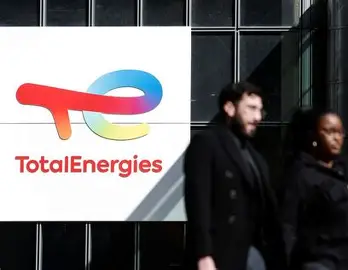
The debate over taxing windfall profits in the energy sector has returned strongly in France following the announcement of TotalEnergies’ impressive quarterly results. The oil giant reported adjusted net income of $5.8 billion for the first quarter of 2026, representing a 51% increase year-on-year. The surge was driven by higher oil and gas prices amid geopolitical tensions in the Middle East and ongoing disruptions across global energy markets.
Following these financial results, part of the French political class, particularly parties on the left, has called for an exceptional tax on the company’s profits. Several political leaders argue that these gains were made possible by an international crisis that continues to burden households through rising fuel prices and a higher cost of living. Environmentalists, Socialists, and La France Insoumise have proposed measures ranging from a targeted tax on extraordinary profits to more radical ideas involving strategic infrastructure.
Prime Minister Sébastien Lecornu chose to publicly defend the company. Speaking before the Senate, he rejected what he described as “Total bashing,” emphasizing that the group is a major pillar of the French economy, employs thousands of people, and represents a strategic national asset. According to him, weakening a company of this scale could damage France’s competitiveness at a time when the economic environment remains fragile.
However, the Prime Minister did not completely rule out future taxation. He stated that no option had been formally excluded, while favoring for now a voluntary redistribution approach. He notably urged TotalEnergies to return part of its gains to consumers through temporary fuel price caps or targeted commercial support measures. This middle-ground strategy aims to avoid a direct confrontation with business leaders while responding to growing social pressure.
The issue now goes beyond France. Several European countries, including Germany, Spain, Italy, Austria, and Portugal, have recently supported the idea of a European levy on extraordinary profits generated by energy companies. Their stated objective is to ensure that firms benefiting indirectly from the economic consequences of war and international tensions contribute more to society.
For President Emmanuel Macron and his government, the equation remains delicate. Since 2017, the French executive has positioned itself as pro-investment and supportive of economic attractiveness. Imposing a tax on one of the country’s flagship companies could send a contradictory signal to investors. On the other hand, taking no action could intensify criticism over inaction regarding purchasing power and wealth concentration.
The TotalEnergies case therefore reflects a broader debate taking place across Europe: how to balance energy sovereignty, tax fairness, consumer protection, and the green transition. As long as oil prices remain high and sector profits continue to grow, the question of windfall profits is likely to remain at the center of the French political agenda.