
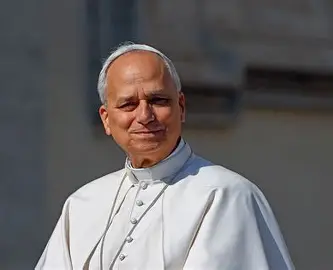
Relations between the White House and the Vatican have entered a new phase of tension following a direct attack by Donald Trump against Pope Leo XIV, highlighting a deep ideological clash between political power and religious authority.
The dispute began after the pope took a strong stance on the international stage. During a vigil for peace, he condemned ongoing conflicts, particularly those involving the United States and its allies, criticizing what he described as a “delusion of omnipotence” and calling for diplomacy over military action. His remarks were widely interpreted as a critique of U.S. foreign policy.
In response, Donald Trump issued a sharp statement on his platform Truth Social, labeling the pope as “weak on crime” and “terrible at foreign policy.” He also accused him of promoting “radical” views and interfering in political matters that, in his view, fall outside the Church’s role.
This confrontation represents a rare rupture between a U.S. leader and the head of the Catholic Church. It builds on existing tensions fueled by the pope’s repeated criticisms of American immigration policies and military interventions abroad.
Despite the criticism, Pope Leo XIV responded firmly but calmly, stating that he is “not afraid” of the Trump administration and reaffirming his commitment to speaking out against war and promoting peace in line with Christian teachings.
The controversy escalated further when Trump shared an AI-generated image depicting himself in a Jesus-like form, sparking backlash across political and religious circles, including among conservative groups.
This clash underscores a broader divide between two worldviews. On one side is a political approach centered on security, sovereignty, and military strength; on the other, a religious perspective emphasizing peace, compassion, and international cooperation.
Beyond the individuals involved, this dispute could have lasting implications for U.S.–Vatican relations and may deepen divisions within public opinion, particularly among American believers torn between political loyalty and spiritual values.