
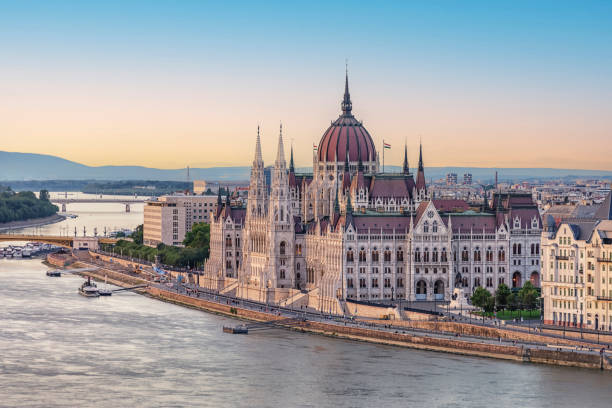
The visit of U.S. Vice President JD Vance to Budapest marks a major geopolitical turning point just days before Hungary’s parliamentary elections, highlighting the growing alignment between the administration of Donald Trump and Prime Minister Viktor Orbán, while also reigniting tensions with the European Union and unfolding within a broader international context shaped by escalating global crises, including tensions involving Iran and the ongoing war in Ukraine
With the April 12 vote approaching, widely seen as the most uncertain in over a decade, JD Vance publicly appeared alongside Viktor Orbán and even stated that he was “here to help” his campaign, an unusual move for a foreign official and one widely perceived as direct interference in Hungary’s electoral process This high-level visit confirms Washington’s strategic support for the nationalist leader, further reinforced by previous statements from Donald Trump and members of his administration
During his visit, Vance also sharply criticized the European Union, accusing it of “interfering” in Hungary’s domestic affairs and attempting to weaken the country economically, thereby deepening transatlantic tensions This rhetoric reflects a shared ideological stance between Orbán and American conservatives, centered on national sovereignty, opposition to supranational institutions, and a hardline approach to immigration
However, this support comes at a politically sensitive moment for Viktor Orbán, who has been in power since 2010 and now faces a strengthened opposition led by Péter Magyar and his Tisza party, which has been leading in several opinion polls This unprecedented electoral dynamic is putting pressure on a political system often criticized for its “illiberal” nature and its control over key institutions
Beyond Hungary’s domestic politics, the stakes extend far beyond its borders The country has become a symbol for nationalist and populist movements worldwide, particularly for the MAGA movement in the United States A potential defeat for Orbán would therefore represent a significant ideological setback for this political current
At the same time, the broader international context amplifies the importance of this visit As global tensions intensify, particularly regarding Iran and the war in Ukraine, Orbán’s position remains controversial within Europe due to his ties with Russia and his opposition to certain EU policies, especially on energy and support for Kyiv
Finally, the electoral campaign is unfolding in a highly tense atmosphere, marked by accusations of foreign interference, incidents involving critical energy infrastructure, and increasing polarization within Hungarian society In this volatile environment, JD Vance’s visit appears both as a direct political endorsement and as a strong signal of the ongoing geopolitical realignments between the United States, Europe, and their respective allies
As Hungary approaches a decisive vote, it stands at the center of a broader political and ideological confrontation that goes well beyond its borders, illustrating the emerging fault lines of the contemporary world between sovereignty, strategic alliances, and global rivalries