
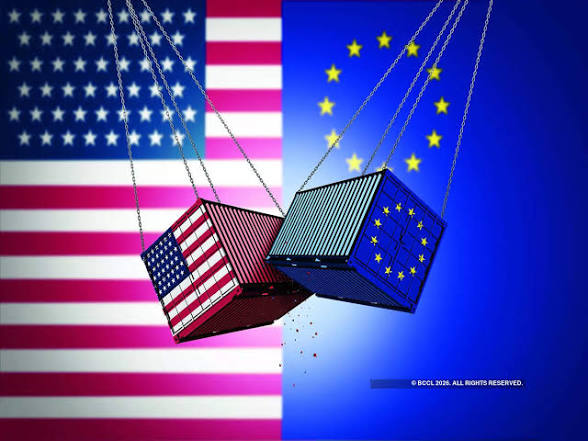
The European Parliament’s trade committee has taken a key step by approving the trade agreement between the European Union and the United States, originally signed in the summer of 2025 but delayed for several months due to significant political and economic disagreements. This approval paves the way for a final vote in the European Parliament in the coming weeks.At the core of the agreement is a major restructuring of transatlantic trade relations.
The European Union has committed to eliminating nearly all tariffs on U.S. industrial goods, while the United States will maintain duties of up to 15% on certain European exports.This apparent imbalance has fueled criticism within the European Union, where some policymakers and business stakeholders argue that the deal is unfavorable.
However, its supporters contend that it helps prevent a trade escalation with Washington, especially in a context marked by a more protectionist U.S. policy and recurring tensions over trade and regulatory issues.The committee vote does not mark the end of the process. Several conditions and amendments have been introduced by Members of the European Parliament, including review mechanisms and safeguard clauses.
Among them is a provision that could allow the EU to reinstate tariffs after 18 months if U.S. commitments are not upheld, reflecting a clear effort to protect European interests amid ongoing uncertainty.Meanwhile, discussions continue between EU institutions and member states, which could delay the final adoption of the agreement. Lawmakers are calling for stronger guarantees from the United States, particularly regarding regulatory stability and predictability for European businesses.
The agreement comes at a time of heightened geopolitical and economic tensions, marked by growing global trade rivalries and the European Union’s determination to safeguard its interests while maintaining strategic ties with its main economic partner.
If ultimately adopted, the deal could significantly reshape transatlantic trade, while raising broader questions about the balance of concessions in international trade agreement.