
The Southern African Development Community (SADC) officially concluded, the deployment of its regional Emergency Response Team (ERT) in Madagascar, marking the end of the first phase of response to the passage of the tropical Cyclone Gezani. This mission, conducted in support of national authorities, highlights both the severity of the impacts suffered by the island nation and the growing role of African regional mechanisms in coordinated disaster management.
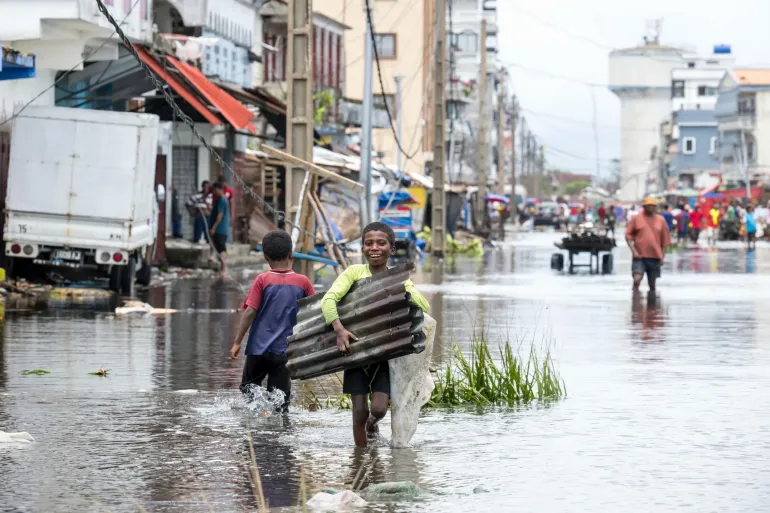
Cyclone Gezani struck Madagascar’s east coast on February 10, 2026, after intensifying in the Indian Ocean. The strong winds, heavy rainfall, and storm surges caused major flooding and landslides, affecting at least 18 districts across five regions. According to SADC data, over 400,000 people were impacted, with 62 confirmed deaths, 15 missing persons, and more than 800 injured. Beyond the human toll, material damages were substantial: destroyed homes, damaged road infrastructure, disrupted water and electricity networks, and schools and health centers partially or fully out of service.
Faced with the scale of the destruction, the Malagasy government activated its national disaster management mechanism through the National Disaster Risk Management Office (BNGRC). The official integration of SADC’s ERT into this framework on February 18 strengthened rapid assessment capabilities, operational coordination, and technical support. The regional intervention extended beyond immediate assistance, focusing also on multisectoral needs analysis and recommendations for the post-emergency phase.
SADC’s support reflects structured regional solidarity. By mobilizing experts in search and rescue, logistics, information management, and humanitarian coordination, the organization demonstrated its capacity for rapid response within member states. This collective approach reduces exclusive dependence on extra-African partners and reinforces African mechanisms for responding to climate crises, whose frequency and intensity are increasing in the Indian Ocean region.
The mission also benefited from technical and logistical support from international partners, including the World Food Programme (WFP), the United Nations Office for the Coordination of Humanitarian Affairs (OCHA), and the UNDAC (United Nations Disaster Assessment and Coordination). This multi-actor coordination optimized information flow, prevented duplication, and prioritized the most vulnerable areas, particularly regarding access to safe water, food security, and the restoration of essential services.
Strategically, the end of the ERT deployment does not mark the end of needs. Rather, it signals a new phase: reconstruction and resilience building. Priority sectors include water, sanitation, and hygiene (WASH), rehabilitation of critical infrastructure, restoration of livelihoods, and securing food supply chains. In a context where Madagascar is regularly exposed to climatic shocks, reconstruction cannot be limited to restoring previous conditions; it must incorporate stronger building standards, risk-informed land-use planning, and increased investment in early warning systems.
The Gezani episode highlights a dual challenge for Madagascar: responding to the humanitarian emergency while addressing structural vulnerabilities. Population concentration in exposed areas, fragile infrastructure, and budgetary constraints limit the country’s shock absorption capacity. In this context, regional cooperation led by SADC appears essential, but it must be accompanied by sustained financial support and a medium- to long-term national climate resilience strategy.
By concluding its mission, SADC reaffirmed its commitment to Madagascar. However, the success of the next phase will depend on coordinated mobilization of national, regional, and international resources. Beyond its immediate impact, Cyclone Gezani serves as a reminder that disaster management in the Indian Ocean is no longer just a matter of emergency response—it is a structural challenge for development, governance, and human security.