
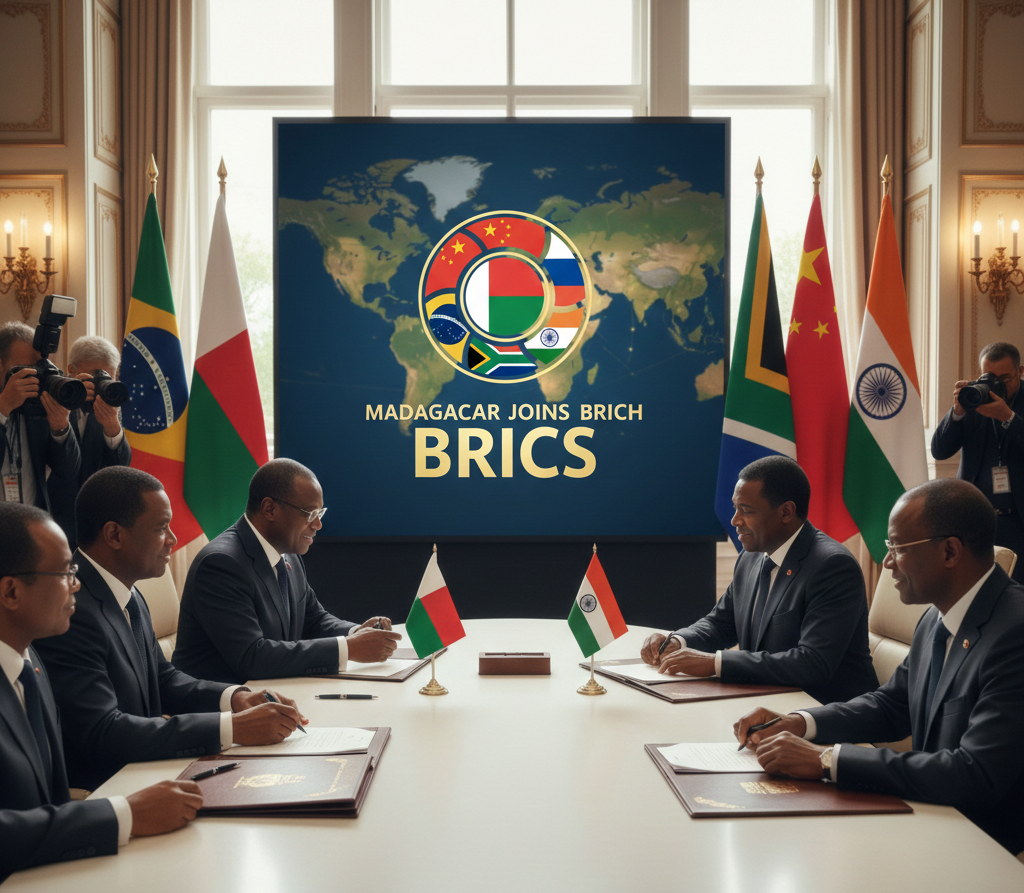
Madagascar has reached an important milestone in its foreign policy by announcing its intention to join the BRICS group, which brings together major emerging economies such as Brazil, Russia, India, China, and South Africa, alongside newly admitted members. This strategic orientation was confirmed following an official visit by the Malagasy President to South Africa, signaling a clear desire to strengthen South–South partnerships and diversify the country’s economic alliances.
This move comes at a time when many African countries are seeking to reduce their reliance on traditional financing channels and gain access to new sources of investment. By moving closer to the BRICS, Madagascar aims to unlock greater opportunities in trade, infrastructure development, and financial cooperation, particularly through alternative mechanisms such as the group’s New Development Bank.
Beyond its diplomatic dimension, this initiative is closely linked to Madagascar’s national economic priorities. Discussions held during the visit focused on several key structural projects, notably in the areas of road infrastructure, industry, and telecommunications. These sectors are viewed as critical to supporting growth, improving national competitiveness, and attracting increased foreign direct investment.
Madagascar’s potential entry into the BRICS, initially envisioned under a partner country status, would allow the country to take part in the bloc’s exchanges and projects without becoming a full member. This gradual approach would provide diplomatic flexibility while paving the way for deeper economic integration in the medium term.
If confirmed at upcoming BRICS summits, this strategic shift could significantly reshape Madagascar’s position on the international stage. By aligning itself with the BRICS, the country seeks not only to enhance its diplomatic profile but also to create the conditions for more diversified economic development, built on new partnerships and stronger integration into the dynamics of emerging economies.