
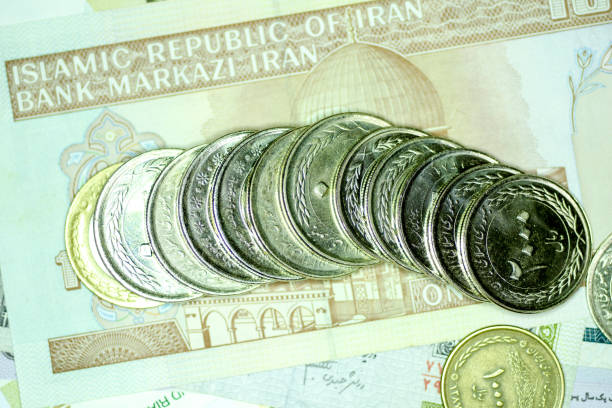
The announcement that Iran’s currency, the rial, is now officially worth “$0” has sent shockwaves across social media and international news outlets. While this statement may seem exaggerated at first glance, it actually reflects an extremely serious economic situation, marked by a historic depreciation of the national currency and an almost total loss of confidence in Iran’s monetary system. This does not mean that the rial has legally ceased to exist, but rather that it has become a powerful symbol of the scale of its collapse against major international currencies.
In practical terms, the rial has lost so much value that it has become almost imperceptible when converted into dollars or euros. On some automatic currency converters, its exchange rate is rounded down to zero, not because the currency no longer exists, but because its value has become infinitesimal. On the parallel market, which more accurately reflects economic reality than the official rate, more than one million rials are now required to obtain a single U.S. dollar. This situation illustrates a gradual but relentless erosion of the currency’s purchasing power, which has accelerated sharply in recent years.
The causes of this collapse are multiple and deeply rooted in Iran’s economic and political structure. International sanctions, particularly those related to the nuclear issue, have played a central role by isolating the country from global financial markets. They have restricted oil exports, the main source of foreign currency, reduced access to international capital, and weakened the balance of payments. Alongside these external constraints are major internal problems, including inefficient economic management, heavy dependence on oil revenues, persistent corruption, and a lack of productive diversification.
High inflation is another key factor. In Iran, rapid and sustained price increases have progressively stripped the rial of its role as a store of value. Faced with the constant erosion of their purchasing power, many households and businesses seek protection by converting their income into foreign currencies, gold, or tangible assets, which further intensifies pressure on the national currency. This vicious cycle fuels the depreciation of the rial and reinforces widespread distrust in the monetary system.
Iranian authorities have attempted to respond to this crisis through technical measures, including plans for monetary reform aimed at removing several zeros from the rial to simplify transactions and restore an appearance of stability. However, such adjustments remain largely symbolic if they are not accompanied by deep economic reforms. Without controlling inflation, boosting production, and improving international economic relations, removing zeros does not change the real value of the currency nor the living conditions of the population.
On a social level, the collapse of the rial has direct and severe consequences. The sharp rise in the prices of basic goods, medicines, and essential services weighs heavily on households, particularly the most vulnerable. This deterioration in living standards fuels growing public discontent, which has led to recurrent protests and increased social instability. The monetary crisis thus becomes a political issue, highlighting the close link between economic performance, institutional trust, and social stability.
Ultimately, the fact that the Iranian rial is displayed as “$0” should not be understood literally, but as a powerful warning signal. It symbolizes the failure of an economic system under constant pressure and the magnitude of the loss of value of a currency weakened by inflation, sanctions, and widespread distrust. Unless structural imbalances are addressed and confidence is restored, the rial will remain a reflection of a fragile economy, and this monetary crisis will continue to have profound repercussions on Iranian society.